
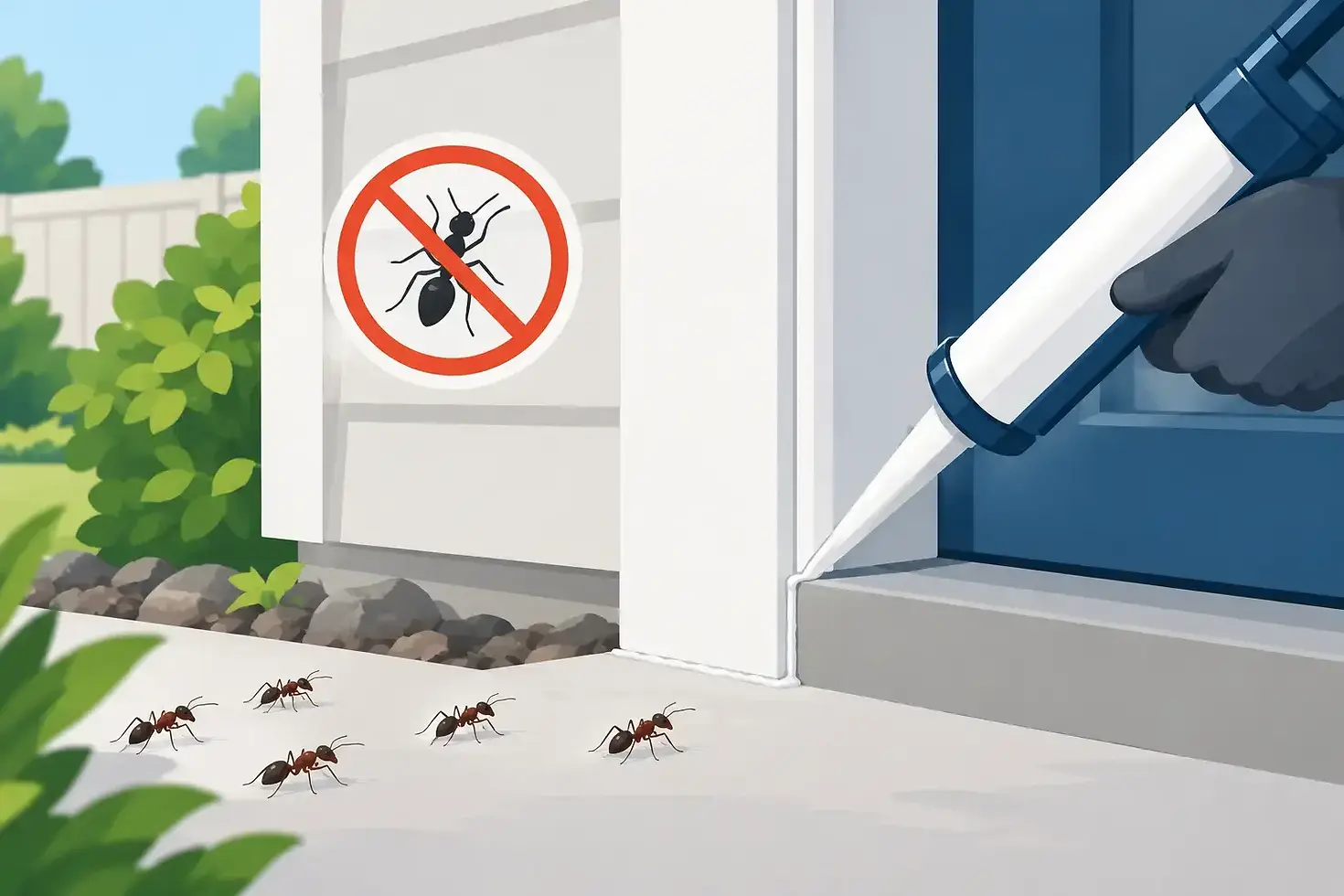
How to Seal Ant Entryways and Keep Ants Outside

A line of ants at the kitchen counter rarely begins at the counter. In Southern California homes, ants commonly follow tiny gaps around plumbing, windows, doors, utility lines, and foundations - then leave a scent trail that invites the rest of the colony inside. Knowing how to seal ant entryways is one of the most effective ways to interrupt that pattern without relying on heavy chemical treatment.
Sealing works best as part of an Integrated Pest Management approach: identify the ant species and travel route, remove the food and moisture drawing ants inside, treat an active colony when needed, and close the openings that make repeat visits easy. The goal is not simply to hide a crack. It is to make the building less accessible and less attractive to ants over time.
Find the Entryways Before You Seal Them
Ants can enter through openings far smaller than most homeowners expect. A gap around a pipe under the sink, a worn door sweep, or a crack where stucco meets a window frame may be enough. Some routes are visible from indoors, while others begin outside along a foundation wall, patio, planter, or utility connection.
Start by watching the trail rather than immediately spraying or wiping it away. Early morning and late afternoon are often productive times to observe activity, especially around kitchens, bathrooms, laundry areas, pet bowls, and exterior walls. Follow the ants in both directions. The entry point is often where the trail disappears into a seam, hole, or unsealed joint.
Inside, check around plumbing penetrations under sinks, behind refrigerators, near dishwasher lines, and around bathroom fixtures. Outside, inspect door frames, window frames, cable and air-conditioning lines, foundation cracks, vents, and the joint between patios or walkways and the home.
Do not assume every ant is coming through the closest visible gap. Argentine ants, a common concern in Los Angeles and Orange County, can establish broad trail networks and move between outdoor nesting sites and interior food or water sources. A careful inspection helps you avoid sealing the wrong opening while the main route remains active elsewhere.
How to Seal Ant Entryways With the Right Materials
The right sealant depends on the location, the size of the opening, and whether the surface moves with heat, moisture, or normal building expansion. For small, stationary cracks in dry interior areas, a paintable acrylic latex caulk may be appropriate. Around exterior windows, doors, siding, and utility penetrations, a quality exterior-grade silicone or polyurethane sealant generally provides better flexibility and weather resistance.
Before applying caulk, remove loose debris, old failing sealant, dust, and moisture. A sealant cannot bond well to a dirty or damp surface. Let the area dry completely, then apply a continuous bead that fills the gap without leaving pinholes. Smooth it with the proper tool or a gloved finger, following the product directions.
For wider gaps, caulk alone may shrink, crack, or fall into the opening. Insert foam backer rod first, then apply sealant over it. This creates a more durable joint and reduces wasted material. For holes around pipes or irregular utility openings, copper mesh can help block access before sealing around the edges. Unlike softer materials, copper mesh is difficult for many pests to pull apart.
Door sweeps and weatherstripping deserve equal attention. If daylight is visible beneath an exterior door, ants and other pests may have an easy path indoors. Replace flattened, torn, or poorly fitted weatherstripping and make sure the door sweep touches the threshold along the full width of the door.
Openings You Should Not Seal
Not every opening in or around a structure should be closed. Never seal required drainage holes, roof or attic ventilation, combustion-air openings, or weep holes in brick and stucco systems without professional guidance. These features help control moisture and maintain safe airflow. Blocking them can create costly moisture problems and may make conditions more favorable for pests in the long run.
If ants are emerging from a wall void, electrical outlet, or structural crack, avoid forcing large amounts of caulk into the area before the activity has been assessed. Sealing a colony into a void can redirect ants to a new opening rather than solve the source of the problem.
Remove the Trail That Leads Ants Back
Sealing gaps is more effective when you also remove the scent trail ants use to navigate. Clean counters, baseboards, and the floor along the trail with soapy water or a mild household cleaner. Focus on the path, not just the ants you can see. This helps disrupt the pheromone trail that guides other workers to food and water.
Store pantry foods in tightly closed containers, wipe spills promptly, and avoid leaving pet food out overnight when possible. Rinse recyclables before placing them in indoor bins, and empty trash regularly. Even small amounts of syrup, fruit juice, grease, or crumbs can sustain a steady ant route.
Moisture is just as persuasive as food. Repair leaking pipes, dry areas beneath sinks, address condensation around appliances, and make sure irrigation is not keeping soil directly against the foundation constantly damp. Ants often move indoors when outdoor conditions become too dry, too wet, or when a dependable water source is available inside.
Work From the Outside In
Ant exclusion is not only about the walls of the home. Exterior conditions can create an easy bridge to the structure. Trim tree branches, vines, and dense shrubs away from the roofline, windows, and exterior walls. Keep mulch, leaf litter, stacked wood, and stored materials from resting directly against the foundation where possible.
Irrigation should support plants without soaking the structure. Adjust sprinkler heads that spray siding, windows, or door thresholds, and correct pooling water near patios and foundations. This protects building materials while reducing the moisture conditions that can attract ants and other pests.
For commercial properties, the same principles apply at a larger scale. Loading doors, utility rooms, break areas, trash enclosures, landscaping edges, and exterior wall penetrations should be part of regular maintenance inspections. Property managers often see better long-term results when pest prevention and facility maintenance teams share observations rather than treating ant activity as a one-time cleaning issue.
When Sealing Alone Is Not Enough
Sealing entry points prevents access, but it does not always eliminate an established colony. If you are seeing large numbers of ants daily, finding activity in multiple rooms, or noticing repeated trails after cleaning and sealing, there may be a nesting site nearby or within a structural void.
This is where targeted, lower-impact treatment can be more effective than broad indoor spraying. Depending on the species and conditions, a pest professional may use monitoring, baiting, exterior-focused treatments, habitat adjustments, and exclusion recommendations to address the colony while limiting unnecessary exposure for children, pets, and the environment.
Avoid spraying repellent products directly along every trail before identifying the source. Repellents can scatter certain ants, split trails, or push activity into harder-to-reach areas. A thoughtful treatment plan considers what is attracting the ants, where they are nesting, and how they are entering - not just what is visible at the moment.
Earth First Pest Control uses Integrated Pest Management to pair practical exclusion with responsible, targeted ant control. For homes and businesses with recurring activity, ongoing monitoring can catch new vulnerabilities before a small gap becomes a persistent problem.
Keep Seals in Good Condition
Caulk, weatherstripping, and door sweeps are maintenance items, especially under Southern California sun and seasonal temperature changes. Inspect sealed areas at least twice a year and after heavy rain, repairs, or landscaping work near the home. Look for cracking, separation, peeling, or gaps that have opened around moving materials.
A well-sealed home is not meant to be airtight at the expense of ventilation or drainage. It is meant to remove the easy routes ants use while preserving the building features that keep your property dry and healthy. A few careful repairs, paired with good sanitation and moisture control, can make your home a much less inviting stop on an ant trail.


Comments